Here's a scene I see far too often. A bride sets aside a beautiful budget, walks into the market glowing with excitement, and falls head over heels for a lehenga on day one. She buys it. It's stunning.
Then reality arrives. The jewellery. The footwear. The blouse stitching. The dupatta setting for the ceremony. The trial outfit. The mehendi look. Suddenly the budget that felt so generous is gasping for air — and the wedding is still three months away.
The problem was never the lehenga. It was that no one showed her how the whole budget breaks down. So let me do that now, honestly and completely.
Why "one big number" is the wrong way to budget
Most brides start with a single figure in their head. "I have two lakhs for shopping." That number feels safe, but it's actually dangerous — because a single number has no rules. It bends every time something pretty appears.
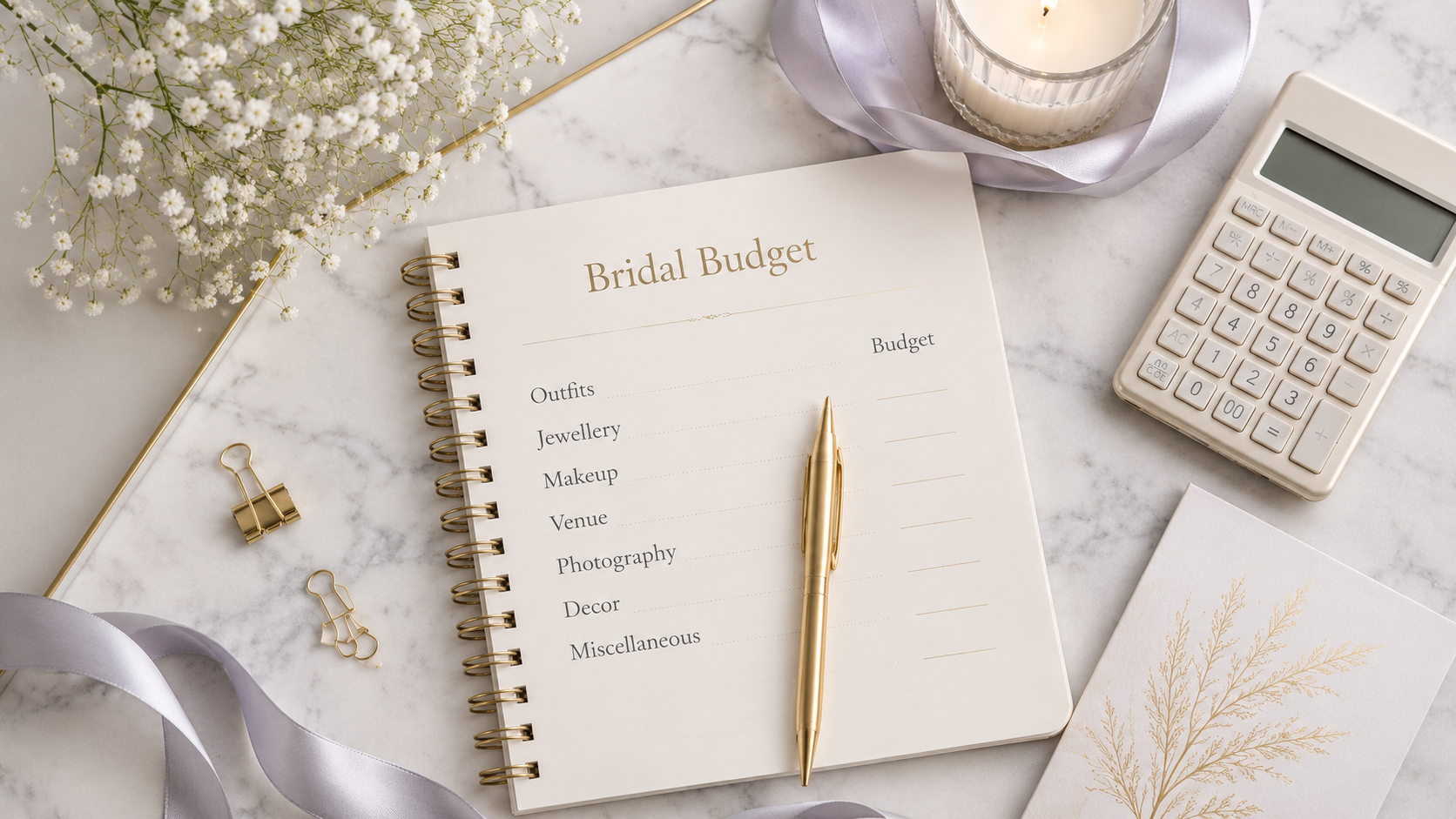
A real bridal budget isn't one number. It's a set of envelopes. Each part of your shopping gets its own limit, and each limit protects the others. When your lehenga envelope is full, it's full — even if the shopkeeper swears the next piece is worth it.
This one shift, from a lump sum to a divided plan, is the single biggest thing that keeps brides from overspending.
How your bridal budget actually splits
Every wedding is different, but the shape of a healthy bridal shopping budget stays surprisingly consistent. Think in proportions, not fixed rupees, so it scales to whatever total you're working with.
The main wedding outfit — around 35–40%
Your primary lehenga or saree takes the largest slice, and that's fine. But notice it's under half. If your wedding outfit is eating 70% of your budget, something has gone wrong, and the rest of your look will suffer for it.
Jewellery — around 20–25%
This one shocks brides. Between the necklace, earrings, maang tikka, bangles, kaleere and any nose ring, jewellery quietly rivals the outfit. Even if you're renting or borrowing family pieces, budget for setting, polishing or a backup set.
The other functions — around 20%
You are not getting married in one outfit. Mehendi, haldi, sangeet, reception — each needs something. Brides who pour everything into the wedding day scramble desperately for these, often overpaying at the last minute. Protect this envelope early.
Footwear, bags and accessories — around 5–8%
Small in percentage, forgotten in practice. Comfortable bridal footwear, a potli or clutch, hair accessories, dupatta pins and safety setups all live here. Skip this envelope and you'll raid a bigger one.
The buffer — around 10%
This is the envelope that saves your sanity. Alterations that go wrong, a blouse that needs re-stitching, a colour that needs matching, a piece you genuinely forgot. Something always comes up. Brides who budget a buffer stay calm; brides who don't end up borrowing from their outfit money.
The hidden costs that wreck bridal budgets
The outfit price on the tag is almost never the real price. These are the quiet extras that catch first-time brides off guard — plan for every one.
A quick, honest consultation in your timezone — and we map all this to your own wedding, together.
Book a consultation →Blouse and fall stitching. A lehenga blouse, especially a fitted or embellished one, costs real money to stitch and often needs multiple fittings.
Can-can and lining. That dramatic flare doesn't come free. The inner can-can, lining and padding are frequently billed separately.
Alterations. Length, fit, sleeve changes — almost every bridal outfit needs them, and bridal-season tailors charge a premium.
Dupatta setting and pins. Getting your dupatta draped and secured on the day, sometimes by a professional, is a cost nobody mentions until it appears.
Trials and travel. Multiple market visits, transport, parking, food, and the small "just this once" buys along the way. Individually tiny, collectively significant.
Consultant tips for stretching every rupee
These are the money moves I coach brides through privately — the ones that make a modest budget look expensive and a generous one go further.
Buy in the right order
Sequence matters. Lock your main outfit first, because everything else — jewellery tone, footwear, dupatta — coordinates to it. Brides who buy jewellery first often end up re-buying it once the lehenga's colour story changes.
Spend where it's seen, save where it's not
Your face-framing pieces — earrings, maang tikka, neckline embroidery — are in every photograph. That's where quality shows. The petticoat, the inner lining, the everyday-comfort items? Save there. Guests photograph your face, not your fall.
Repeat strategically across functions
You do not need a brand-new heavy outfit for every event. A stunning outfit re-styled with different jewellery and a fresh dupatta reads as completely new in photos. One smart repeat can fund a much better main lehenga.
Negotiate from your envelope, not your emotion
When a piece is over budget, say so plainly: "This is lovely, but I've allocated this much." A clear number invites a real counter-offer. Emotional hesitation invites a harder sell. Your budget is your negotiating spine.
Track every rupee as you spend
Keep a running note on your phone, updated the moment you pay. Budgets don't break in one big purchase — they leak through a dozen small ones you never wrote down. Visibility is control.
Common budgeting mistakes to avoid
Treating the outfit budget as the total budget. The lehenga is the headline, not the whole story. Plan for the full look from day one.
Buying jewellery before the outfit. Coordinating in the wrong order almost always means buying twice.
Forgetting the smaller functions. Mehendi and haldi sneak up fast, and last-minute panic shopping is the most expensive kind.
Skipping the buffer. Without it, every surprise steals from your outfit money — and there's always a surprise.
Not tracking spends in real time. A budget you're not watching is a budget you've already lost.
Letting well-meaning family inflate the plan. Everyone has an opinion on what you "must" have. Filter every suggestion through your envelopes, not your guilt.
Your quick bridal budget checklist
- Total budget split into envelopes, not one lump sum
- Main outfit capped at 35–40%
- Jewellery envelope set aside (20–25%)
- Budget reserved for mehendi, haldi and other functions
- Footwear, bags and accessories accounted for
- A 10% buffer protected and untouched
- Hidden stitching, can-can and alteration costs planned
- Purchases sequenced — main outfit first
- Real-time spend tracker on your phone
- Every family suggestion checked against your envelopes
The real secret to a stress-free budget
A bridal budget isn't about spending less. It's about spending on purpose. When every rupee has a job before you leave the house, shopping stops feeling like a gamble and starts feeling like a plan coming together.
The brides who enjoy their shopping most aren't the ones with the biggest budgets. They're the ones whose budgets were built with intention long before they reached the market.
Once your budget is sorted, the next question is where to spend it — and that's where knowing markets like Chandni Chowk versus designer boutiques makes all the difference.
Percentages are just a starting point. In a personalised consultation, we map your entire budget together — envelope by envelope — so you know exactly what to spend, where to save, and where to splurge, with zero last-minute panic.
Book a consultation